
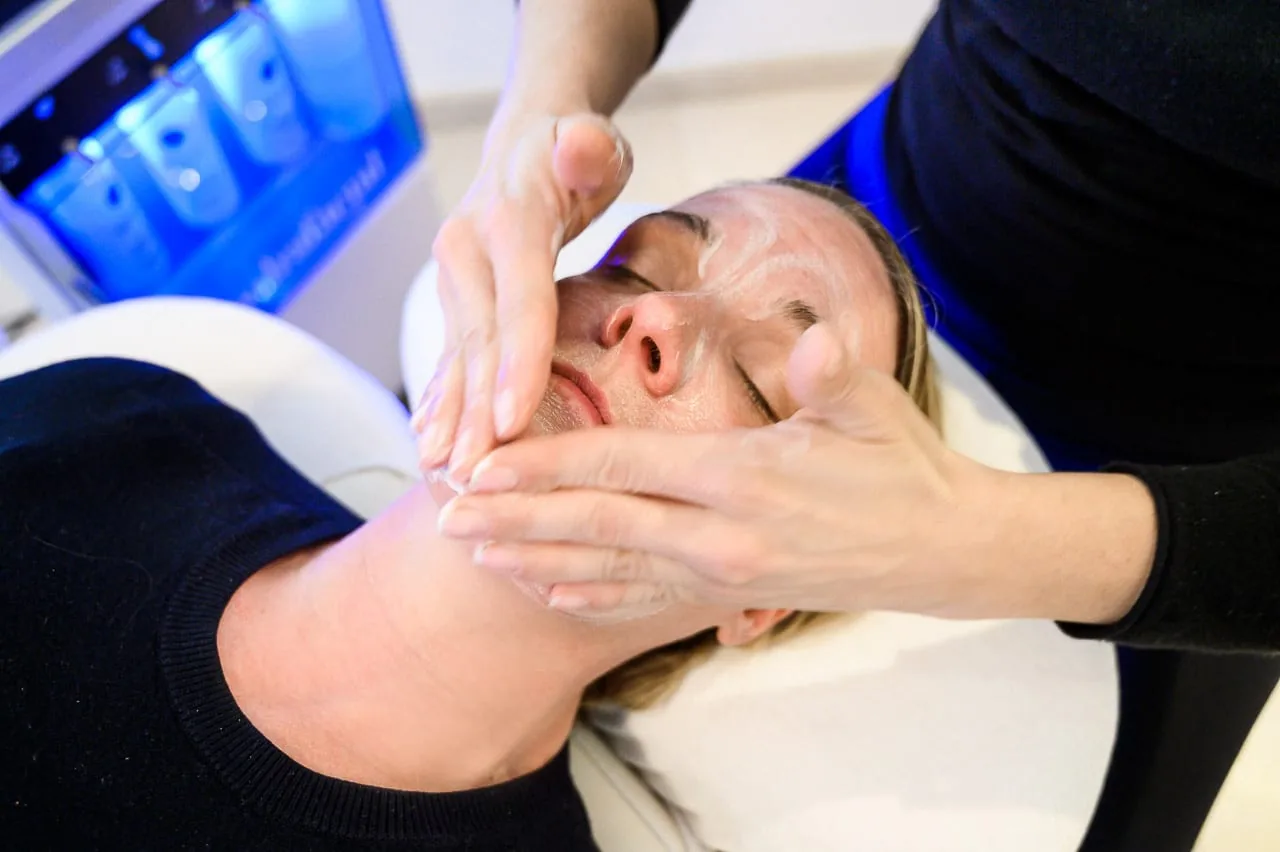
Still getting acne as an adult?
Androgenetic acne (acne androgenetica) in women
The cause here is a hormonal imbalance. This can arise from completely normal hormonal fluctuations, for example during pregnancy or while breastfeeding, or it can be due to an ovarian disorder. Women often notice that their skin gets worse before and during their period, especially on the chin.
Mallorca acne
As the name suggests, this type of acne often appears in summer. Genetics, UV radiation and the use of overly greasy sunscreens often play a role together. Once fall approaches, this form of adult acne usually improves.
Cosmetic acne (acne cosmetica)
This problem often affects women who use too many skincare and makeup products with ingredients that promote blackheads (known as comedogenic ingredients). Common causes are petroleum jelly, lanolin, coconut oil, cocoa butter and palm oil.
Mechanical acne (acne mechanica)
In this form of adult acne, mechanical irritation first leads to comedones and later to inflammation. Clothing, seating or straps are common culprits. A classic example we see here at Skinthetics Cosmetics is men who have developed inflammation and pimples along their shirt collar.
With adult acne, the first important step is always to find out the cause(s) in order to improve the skin in the long term. We then put together an individual treatment plan for you with a supportive skincare routine to support your skin in the best possible way. Working with a dermatologist can be very helpful here to ensure the best all-round treatment for your skin.
You can find more information and answers on the fruit acid peel (AHA peel) page.