Rosacea
Rosacea? What is it, anyway?
Rosacea is an inflammatory change in the skin. It describes a diffuse, sunburn-like redness that is persistent. It involves dilations of the tiniest blood vessels (telangiectasia), which become even more prominent, especially with temperature fluctuations. The blood vessels normally widen in response to certain triggers but, unlike in normal skin, do not contract again.
Couperose (visible small blood vessels) is considered the first stage of the skin disease, a kind of early form. In addition to persistently red areas (caused by tiny spider veins), dilated blood vessels, dry patches and sensitivity, small papules can also occur.
In the second stage, pustules, nodules and swelling appear, which can often become inflamed and fill with pus. The skin is swollen, red and generally has large pores.
The condition usually progresses over years or even decades and can end in nodular thickening of the skin and the dreaded rhinophyma (thickened skin on the nose, usually in men). But don't worry, such severe courses no longer have to happen these days!
The cause of rosacea has not yet been fully explained, and various factors are involved. A genetically determined dilation of the small superficial blood vessels and weakness of the vessel walls and connective tissue are factors. In addition, impaired regulation of the blood supply, inflammation, immune system disorders, hair follicle mites and bacteria are suspected as further triggers. Incidentally, people with fairer skin types and blond or reddish hair are more likely to suffer from rosacea.
Besides a genetic predisposition, there are unfortunately other factors that make the condition worse. Environmental factors such as heat and cold, wind, sun, humidity, air pollution, cigarette smoke, exhaust fumes and pollen, psychological factors such as stress or anger, and external factors such as fragrances, detergents and medications are part of life, but they also promote or worsen skin problems.
The symptoms of rosacea can be relieved very well with a regular skincare routine. The skin, especially with rosacea or couperose symptoms, reacts sensitively to chemical and physical stimuli. Irritating products, harsh cleansers, alcohols, menthol, camphor and harsh peels should be avoided, as should too much rubbing, pressure and pulling on the skin. As a general rule: as little mechanical stress as possible!
Caution is also advised with anything that stimulates blood circulation: alcohol, hot spices, including ginger, and hot drinks, as well as sunbathing, saunas and steam baths. You should avoid hot baths and showers that are too hot, and generally not wash your face with water that is too hot!
Your skincare should definitely soothe, reduce inflammation and prevent or conceal irritation and redness. The skin barrier should be strengthened, which means the skin needs to be supplied with plenty of moisture as well as selected lipids and antioxidants.
Cleansing products should always be mild. When drying off, you shouldn't rub your skin. We recommend skincare products without fragrances or preservatives, ideally gel-based, to soothe the skin and reduce the feeling of heat. Be careful with cortisone-containing medications too, as they often intensify the symptoms.
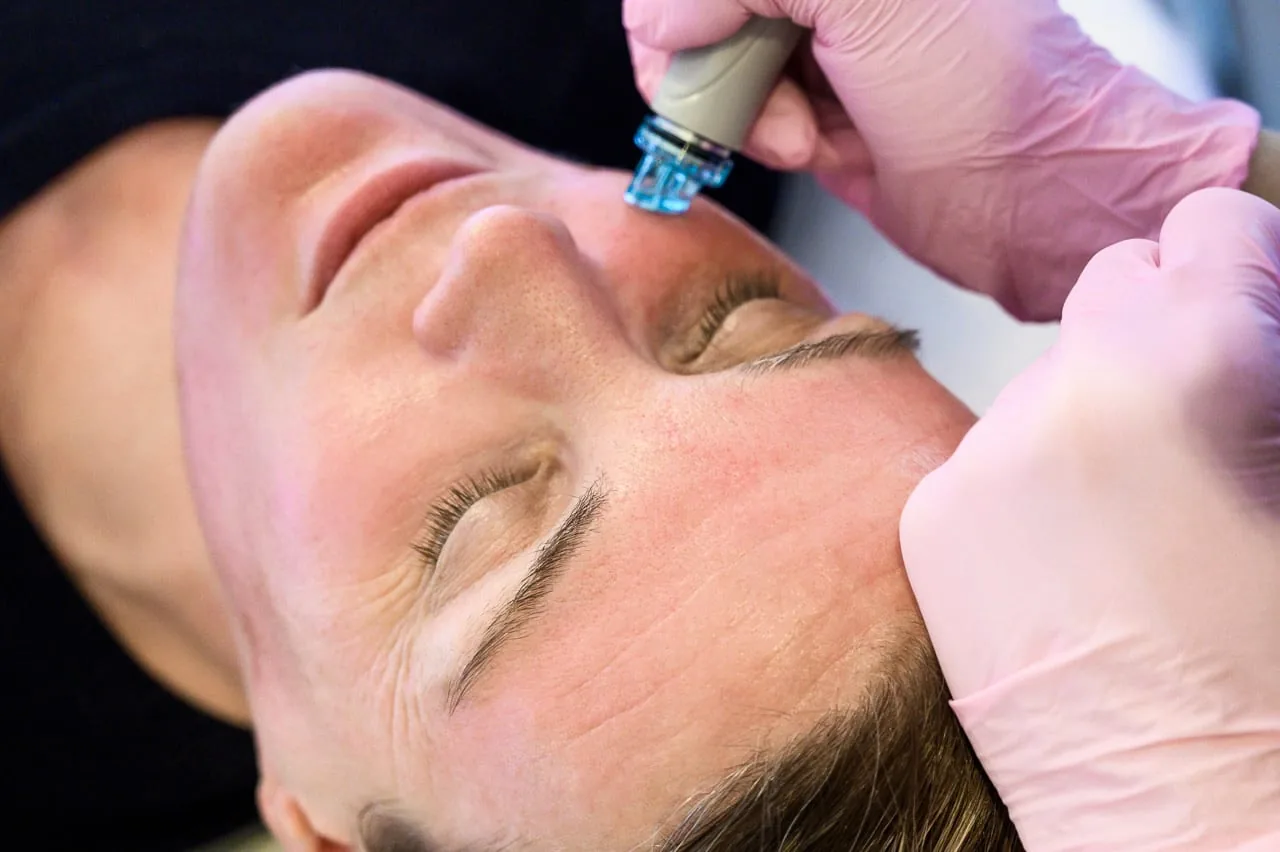
In addition to a good skincare routine, a HydraFacial tailored to skin with rosacea can support your skincare; the treatment of rosacea itself belongs in the hands of a physician. It is important to be treated only by staff trained in rosacea. Our Skinthetics Cosmetics team has received intensive, specialized training for rosacea patients and knows exactly how much pressure, fruit acid, etc. skin with rosacea can tolerate.
Once you have your rosacea under control and then want to significantly reduce the redness, a dermatological laser treatment can help you. The energy of the focused light is absorbed by the red blood pigment (hemoglobin), which heats up and causes the vessel to close. First results can be visible just a few days after a single treatment. Just ask us. We're happy to advise you!
By the way, laser treatments can be performed all year round. You just need to make sure not to sunbathe extensively with the freshly treated areas in the following weeks and to always use a correspondingly high level of sun protection.
Not sure which sunscreen is really good? Take a look at our article on sun protection!
Your team at Skinthetics Cosmetics
You can find more information and answers on the HydraFacial page.